
Jun 26, 2026Sourcing & Supply Chain
How to Request Ingredient Samples from China: A Checklist for Food and Supplement Buyers
Learn how to request ingredient samples from China, including specifications, application, sample quantity, documents, shipping details, and free, paid, or pre-shipment sample options.
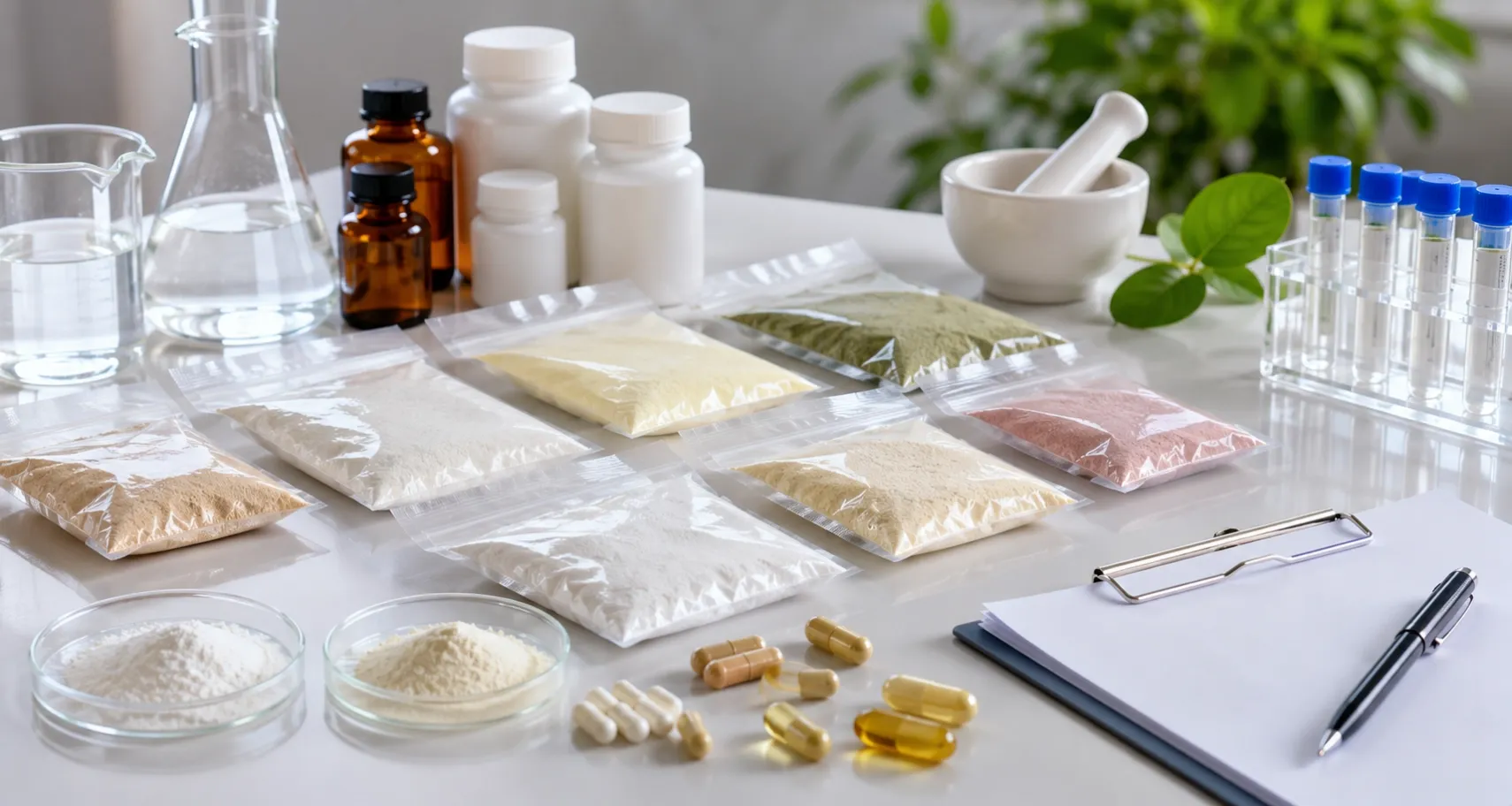
Many ingredient sample requests are delayed not because the supplier cannot provide samples, but because the request is missing key details such as specification, application, sample quantity, required documents, target market, or shipping information.
For food, dietary supplement, cosmetic, feed, and specialty ingredient projects, sampling is an important step before placing a bulk order. A sample allows buyers to review appearance, solubility, taste, odor, particle size, formulation performance, document consistency, and handling suitability before making a purchasing decision.
However, requesting ingredient samples from China is not only about asking for “a small quantity.” To receive the right sample efficiently, buyers should provide clear project information from the beginning.
ELIS Biotech supports global B2B customers with ingredient sourcing, sample coordination, specification confirmation, standard document support, and production-side communication based on actual application requirements.
Why Ingredient Sampling Matters
Ingredient sampling helps buyers evaluate whether a material is suitable for its intended application before committing to commercial quantities. This is especially important when the ingredient will be used in finished consumer products, formulation testing, customer approval, internal R&D, or pilot production.
A sample may be used to check:
- Appearance, color, and odor
- Taste profile
- Solubility or dispersibility
- Particle size and flowability
- Compatibility with other ingredients
- Active content
- Document consistency
- Packaging and handling suitability
For example, a botanical extract may meet the requested active content but have a strong taste or dark color that affects a gummy or beverage formula. A powder may be suitable for capsules but not suitable for instant drink powder because of poor dissolution. A mineral ingredient may require particle size adjustment before being used in a premix or tablet application.
This is why buyers should not evaluate samples only by product name and price. The final application, dosage form, target market, and testing purpose should also be considered.
Key Information to Provide Before Requesting a Sample
A clear sample request helps suppliers recommend the right material and avoid unnecessary back-and-forth communication. Before requesting ingredient samples from China, buyers should prepare the following information.
1. Ingredient Name and Specification
Many ingredients have multiple grades, active contents, forms, and application types. For example, “Vitamin B12” may refer to Cyanocobalamin, Methylcobalamin, or a diluted premix form. “Green Coffee Bean Extract” may vary by chlorogenic acid content, caffeine content, botanical source, and solubility.
Useful information may include:
- Product name
- CAS number where applicable
- Required active content
- Test method if specified
- Grade requirement
- Botanical source or plant part where applicable
- Solubility or particle size requirement
- Special purity or contaminant limits
If the buyer does not have a fixed specification, it is better to explain the intended application. The supplier can then help check which specification may be more suitable.
2. Final Application and Product Format
The same ingredient may perform differently in different finished product formats. Buyers should clarify whether the ingredient will be used in capsules, tablets, gummies, drink powders, stick packs, sachets, beverages, nutrition powders, cosmetic formulations, pet nutrition, feed applications, premixes, or OEM projects.
For capsules or tablets, particle size, flowability, bulk density, and compatibility with excipients may be important. For drink powders and beverages, solubility, taste, color, and stability may be more important. For gummies, heat stability, flavor impact, and color interaction may need closer review.
By sharing the final application, buyers can help suppliers avoid sending a technically correct but commercially unsuitable sample.
3. Sample Quantity and Testing Purpose
Sample quantity should match the purpose of testing. A small quantity may be enough for appearance review or basic internal screening, while a larger quantity may be needed for formulation trials, pilot production, or customer evaluation.
Common sample purposes include:
- Initial appearance check
- Solubility test
- Taste or odor review
- Lab testing
- Formula development
- Pilot production
- Customer approval
- Stability testing
For many raw ingredients, samples may be available in quantities such as 10 g, 50 g, 100 g, 500 g, or 1 kg depending on product value, availability, and testing purpose. For high-value ingredients, controlled products, customized materials, or special processing requests, sample quantity and sample cost should be confirmed case by case.
4. Documents, Target Market, and Shipping Details
Documents are often needed even at the sample stage. Buyers may require documents for internal review, customer approval, customs clearance, or laboratory testing.
Common sample-related documents may include:
- COA
- Specification sheet
- SDS/MSDS
- Allergen statement
- GMO statement
- Halal certificate where available
- Kosher certificate where available
- Heavy metal or microbiology test where available
- Country of origin information where available
Buyers should also share the target market, such as the United States, European Union, United Kingdom, Middle East, Southeast Asia, Australia, New Zealand, Japan, South Korea, Latin America, or Africa. Target market information helps suppliers understand which document or quality points may need attention.
For sample shipping, buyers should provide receiver name, company name, full delivery address, phone number, email address, courier account if available, preferred courier, and any customs or import instructions. Buyers should also confirm whether they have the ability to receive and clear the sample in their country.
Free Sample, Paid Sample, and Pre-Shipment Sample
Not all samples are the same. Before requesting a sample, buyers should understand the difference between free samples, paid samples, and pre-shipment samples.
A free sample is usually a small regular sample provided for initial screening. It may be available for common ingredients with existing stock, depending on product value, sample quantity, shipping cost, and supplier policy.
A paid sample may be required for high-value ingredients, larger sample quantities, customized specifications, special processing, controlled products, or materials that require separate preparation. Paid samples are common in B2B ingredient sourcing and should not automatically be seen as a negative signal.
A pre-shipment sample is usually taken from a commercial batch before shipment or during final order confirmation. It may be used for final approval, especially when the buyer needs to confirm batch appearance, packaging, COA consistency, or customer acceptance before shipment.
Buyers should also note that sample approval does not always replace final batch confirmation. For commercial orders, buyers should review the bulk batch COA, specification, packaging, and pre-shipment sample if required.
How the Ingredient Sample Request Process Usually Works
A clear sample process can help both buyers and suppliers save time. For many ingredient projects, the sample request process usually follows these steps:
- Buyer shares the ingredient name, specification, application, sample quantity, and target market. The supplier needs this information to check whether the requested material is available and suitable.
- ELIS Biotech checks suitable specifications and sample availability. If the requested specification is unclear, we may help confirm whether a standard grade, water-soluble grade, food grade, supplement grade, feed grade, or customized form is more appropriate.
- Available documents are confirmed before shipment. Standard documents such as COA, specification sheet, and SDS/MSDS may be checked first. Other documents, such as allergen statement, GMO statement, Halal, Kosher, or test reports, are confirmed where available.
- Shipping details and courier options are reviewed. Receiver information, courier preference, destination country, sample description, and customs considerations should be checked before shipment.
- The buyer receives the sample and provides feedback. After testing, the buyer may request a quotation, additional documents, formulation support, a larger sample, or a pre-shipment sample for the next step.
This process helps ensure that the sample is connected to a realistic commercial project rather than being treated as a disconnected trial.
Ingredient Sample Request Checklist for Buyers
Before requesting ingredient samples from China, buyers should prepare:
- Ingredient name
- Required specification
- Final application
- Dosage form or product format
- Sample quantity
- Testing purpose
- Target market
- Required documents
- Shipping address
- Courier preference or courier account
- Expected bulk order quantity
- Special requirements such as Halal, Kosher, Non-GMO, allergen statement, heavy metals, microbiology, solubility, or particle size
This information helps suppliers check the right material, prepare suitable documents, and provide a more accurate quotation for future commercial orders.
Sample Request Email Template for Buyers
Buyers can use the following template when requesting ingredient samples from a supplier.
Subject: Sample Request for [Ingredient Name] – [Specification/Application]
Dear [Supplier Name],
We are currently evaluating [Ingredient Name] for our [food / dietary supplement / beverage / cosmetic / feed / other] project.
Please help confirm whether you can provide a sample based on the following requirements:
- Product name: [Ingredient Name]
- Required specification: [Active content / grade / test method]
- Final application: [Capsule / tablet / gummy / drink powder / beverage / premix / other]
- Sample quantity required: [Quantity]
- Testing purpose: [R&D / customer approval / lab testing / pilot production / other]
- Target market: [Country or region]
- Required documents: [COA / specification sheet / SDS/MSDS / allergen statement / GMO statement / Halal / Kosher / other]
- Expected bulk order quantity: [Estimated quantity if available]
- Shipping address: [Full address]
- Courier account: [If available]
Please also advise the sample cost, shipping cost, available lead time, and whether the sample will be from current stock or a recent production batch.
Thank you. We look forward to your reply.
Best regards,
[Your Name]
[Company Name]
How ELIS Biotech Supports Ingredient Sample Requests
ELIS Biotech is a China-based ingredient sourcing and supply partner serving global B2B customers across food, dietary supplement, feed, cosmetic, and specialty ingredient sectors.
For sample requests, our support may include:
- Checking suitable ingredient specifications
- Confirming sample availability
- Coordinating with production-side partners
- Preparing standard documents where available
- Supporting COA, specification sheet, and SDS/MSDS requests
- Checking packaging and shipping feasibility
- Communicating application requirements before sampling
- Supporting follow-up quotation after sample evaluation
- Helping buyers clarify whether a free sample, paid sample, or pre-shipment sample is more suitable
Because ingredient performance depends on the actual application, ELIS Biotech encourages buyers to share project details as early as possible. This helps us recommend more suitable sample options and reduce unnecessary trial-and-error.
FAQ
Are ingredient samples from China always free?
Not always. Sample cost depends on product value, quantity, availability, customization requirements, and supplier policy. Some regular samples may be free, while high-value or customized samples may require payment.
How much sample quantity should buyers request?
The suitable sample quantity depends on the testing purpose. A small amount may be enough for appearance or solubility checks, while formula trials, pilot production, or customer approval may require a larger quantity.
What documents are usually provided with ingredient samples?
Common documents may include COA, specification sheet, and SDS/MSDS. Depending on the product and availability, buyers may also request allergen statement, GMO statement, Halal certificate, Kosher certificate, test reports, or country of origin information.
What is the difference between a regular sample and a pre-shipment sample?
A regular sample is usually used for initial evaluation, R&D, or customer screening. A pre-shipment sample is usually taken from a commercial batch before shipment or during final order confirmation, and may be used for final approval before bulk goods are shipped.
Can ELIS Biotech help with ingredient sample coordination?
Yes. ELIS Biotech can help buyers check sample availability, confirm specifications, coordinate standard documents, communicate with production-side partners, and support sample arrangements based on project requirements.
Conclusion
Requesting ingredient samples from China is an important step in food, dietary supplement, cosmetic, feed, and specialty ingredient sourcing. A clear sample request can help buyers receive a more suitable material, reduce communication delays, and improve the efficiency of product development.
Before requesting a sample, buyers should confirm the ingredient specification, final application, sample quantity, required documents, target market, shipping details, and expected next-step demand. Buyers should also understand the difference between free samples, paid samples, and pre-shipment samples before arranging testing.
If you are sourcing ingredient samples from China for food, dietary supplement, cosmetic, feed, or specialty applications, ELIS Biotech can help review your requirements, coordinate with production-side partners, and provide suitable sample support based on your project needs.
Contact ELIS Biotech to discuss your ingredient sample request and sourcing requirements.